
An SAT score that is not improving, even with steady practice, usually means your child is losing points to accuracy habits on easy and medium questions, and more practice problems alone rarely fix that. The fix is changing how they approach each question, then retesting with a steady plan.
Is My Teen Really Just a Bad Test Taker? Carson Flowers · 2:04 · October 23, 2026 · Jump to: 0:00 The question, 0:15 Carson's answer, 1:34 What to do next
| SAT test date | Registration deadline |
|---|---|
| August 22, 2026 | August 7, 2026 |
| September 12, 2026 | August 28, 2026 |
| October 3, 2026 | September 18, 2026 |
| November 7, 2026 | October 23, 2026 |
| December 5, 2026 | November 20, 2026 |
| March 6, 2027 | February 19, 2027 |
| May 1, 2027 | April 16, 2027 |
| June 5, 2027 | May 21, 2027 |
On this page
Why does an SAT score stall in the 1200s or 1300s?
What does accuracy practice look like?
The misconception: my teen is just a bad test taker
Should your child retake the SAT after a small gain?
Why does an SAT score stall in the 1200s or 1300s?
Once a student reaches the 1200s or 1300s, a stuck score is rarely about math or grammar they have never seen; it is almost always about how they handle questions they already know how to solve.
A question we hear a lot goes something like this: my teen took the SAT, is signed up for the next one, does targeted practice every night, and still sits at 1280. Carson Flowers hears that pattern constantly. His read is that students in this range are usually doing the extra work in the wrong place. They review the domains they missed on one test, take another, get the same score, and find they missed a different set of questions in different domains. Chasing those topics one by one goes nowhere, because the misses come from a habit and the habit travels with them.
The scoring explains why this hurts so much. As Carson puts it, missing easy and medium questions costs far more points than getting hard questions right earns back. A student who rushes through the first half of a section and drops three questions they knew how to do has given away points that no amount of advanced practice will recover.
These habits are hard to see from the inside. Carson's point is that it often takes someone else watching how your child works a problem, step by step, to find where the points leak out. If you would like a second set of eyes on your teen's last score report, a free 15-minute call with our team is a good place to talk through what the misses suggest.
Free 15-minute call
Want a plan for your teen's score?
We look at your teen's current score and the colleges on their list, and tell you what it would take to close the gap.
What does accuracy practice look like?
Accuracy practice means slowing down enough that every question your child attempts is one they get right.
Carson tells students that the goal for moving from about 1300 to 1400 is accuracy above everything else, including speed and new content. In practice, that comes down to a handful of specific habits:
- On Reading and Writing, predict the answer before looking at the choices, so the trap answers are easier to recognise.
- Annotate the passage as you read rather than rereading it three times.
- On Math, confirm what the question is asking before solving, then double-check the work on scratch paper.
- Use the built-in Desmos calculator, which is available on the whole Math section in the Bluebook app, to check answers that would take longer by hand. Our guide to the Bluebook Desmos calculator shows where it saves the most time.
The other piece is how practice tests get used. A full practice test is only as useful as the review afterward, where your child sorts every miss into "didn't know it" or "knew it and slipped." For students in this range, the second pile is usually the bigger one. We go deeper on that in whether practice tests raise a score on their own.
One more thing worth checking: if the practice materials have not felt like the real exam, that matters. The SAT is now digital and taken in Bluebook, so practicing in a format that looks and behaves differently can leave a student surprised on test day.
The misconception: my teen is just a bad test taker
Being a "bad test taker" is rarely a fixed trait; it is usually a set of habits during exams that nobody has identified yet.
Carson is direct about this one. When a teen takes two SATs, spends hours with prep books, and gets the same score both times, it is easy for them to decide prep does not work for them. He understands why. That cycle is draining. But in his experience prep works for most students, provided they are coachable and willing to change their habits and put in the work that change requires.
What tends to restore motivation is a clear plan: knowing exactly what to do between now and the next test to get from the current score to the goal. A vague instruction to "study more" after a disappointing result feels like more of the thing that already failed. A plan that names the two or three habits to fix feels different. Our piece on how to motivate a teen to study for the SAT has more on keeping a discouraged student going.
Should your child retake the SAT after a small gain?
Yes; if your child has been prepping and only gained a little, the next SAT is worth taking, and the prep should continue right up to it.
Carson sees this often. A student preps for six or eight weeks, sits for the SAT, and the score barely moves, maybe 30 points. Frequently the cause is nerves: an unfamiliar room, a real exam, the pressure of it counting. He has seen students take another SAT as soon as four weeks later and go up 200 points, because the second time they know what to expect and what to do.
What he does not like seeing is the stop-and-start pattern. A student takes the SAT, stops prepping for two weeks while waiting on scores, sees a disappointing number, crams for two weeks, then tests again. Or skips prep entirely and hopes the next test goes better. We explain the timing in whether to wait for scores before studying again.
If the prep was helping and the score was moving the right way, keep going with it. If it was not, Carson suggests trying a different tutor or method, or raising the intensity if the prep was light. One senior we worked with moved from 1280 to 1390 in three weeks with live classes and weekly 1-on-1 sessions; how Amanda broke out of the 1280s shows what that stretch looked like.
When does a break or the ACT make sense?
A planned break, or a switch to the ACT, can help a junior who has tested more than once and lost confidence.
This sounds like it contradicts the advice above, and the difference is in the timing. Carson's warning is about drifting between tests that are close together. A deliberate pause is something else. For a junior in the spring who has already sat for the SAT a couple of times, he suggests taking a month off to recover, then returning with a fresh plan.
That return can be a good moment to try the ACT. Carson's framing for the student is simple: you are not a bad test taker, the SAT may just be the wrong test for you, so let's try the other one. A fresh start on a different exam can rebuild confidence, and some students simply do better on it. Our comparison of when the ACT is the better choice walks through how to decide.
Whichever test your child takes next, colleges set their own rules on combining scores, so check each college's policy. Confirm it with each school's admissions office rather than relying on any summary, ours included.
If your teen's score has stalled and you are not sure whether the answer is a retest, a new approach or a different exam, book a free 15-minute call and we will look at where the points are going.
More answers from Carson
 A Senior Stuck at 1210 Should Take One More SAT
2:13
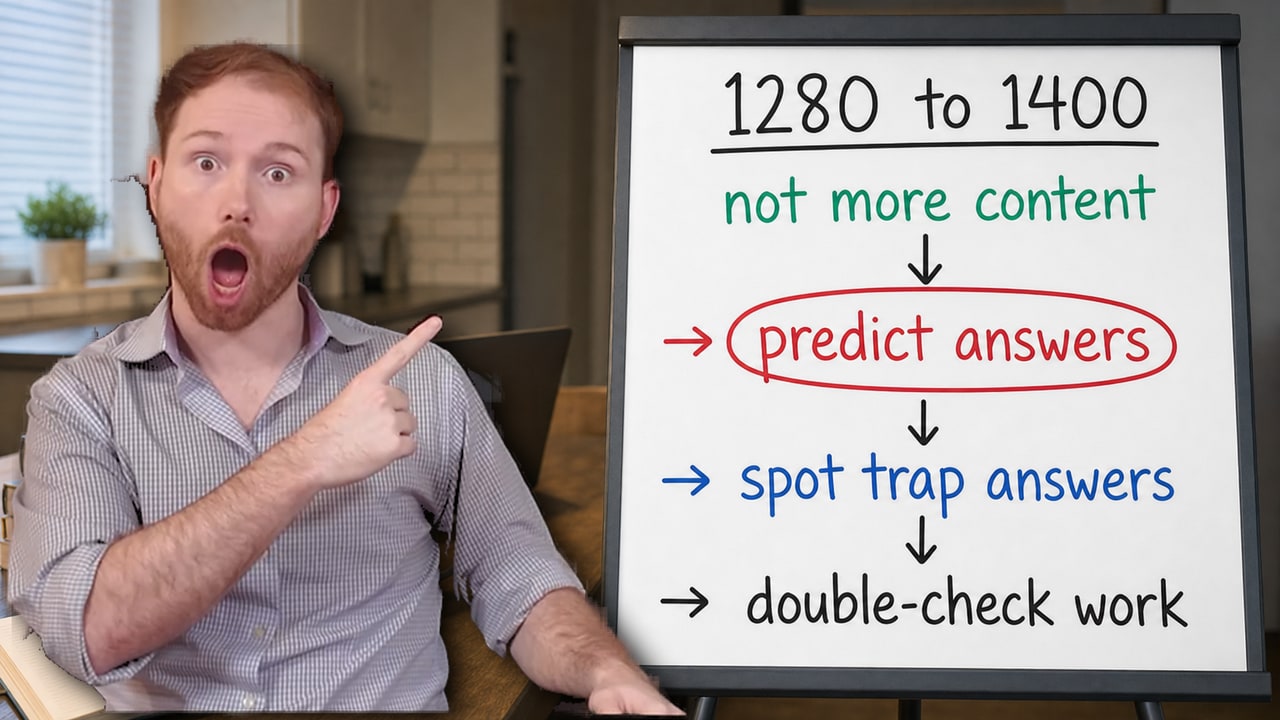 Why Is My Teen Stuck at the Same SAT Score?
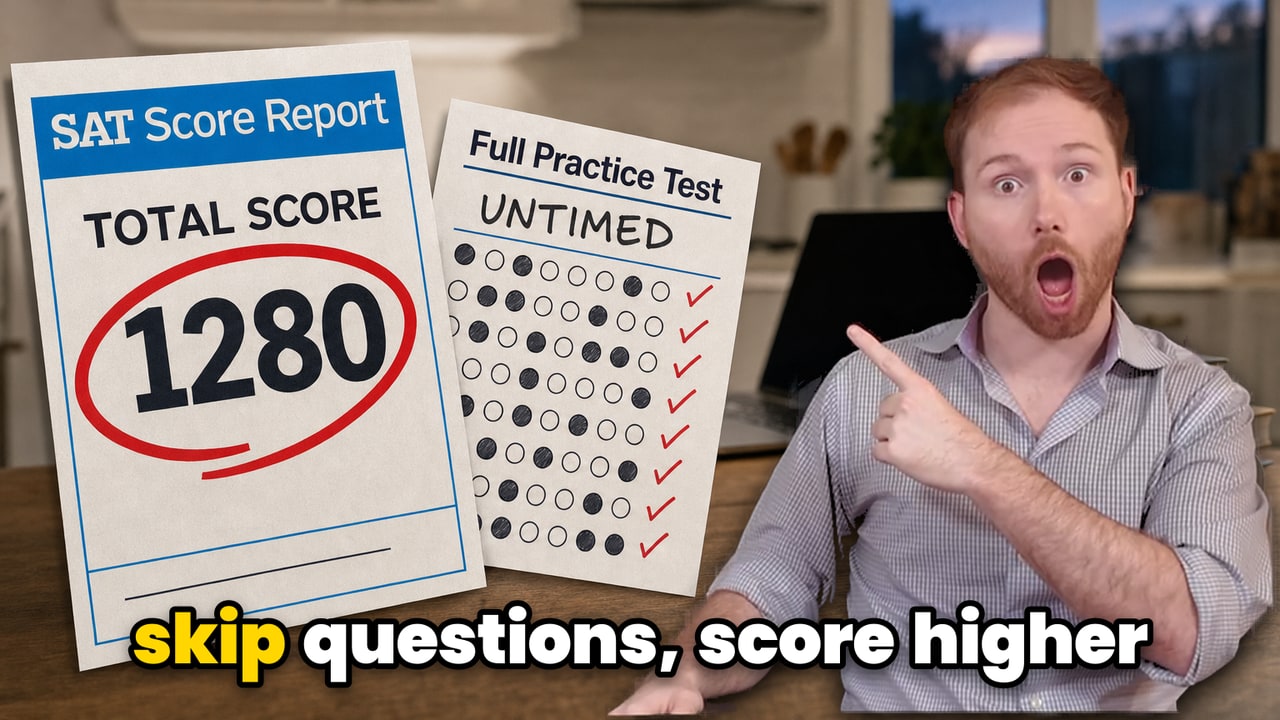 Why a 1280 SAT Score Stalls and How Accuracy Breaks It
Quick answers
Will doing more SAT practice problems raise a stuck score?
Usually not, once a student is scoring in the 1200s or 1300s. At that level the misses tend to come from accuracy habits on questions they already know, so the fix is how they work each problem rather than how many problems they do.
Is a 30-point SAT gain worth another retake?
Yes, if your child keeps prepping until the next test. Carson has seen students go up 200 points on a test taken four weeks later, once the nerves of the first sitting were gone.
Should my teen switch to the ACT if the SAT score is stuck?
It can be worth trying, especially for a junior who has taken the SAT more than once. Some students do better on the ACT, and a fresh start often helps their confidence.
Do colleges superscore the SAT?
Many colleges take the best section scores across sittings, but each college sets its own policy. Check each college's admissions page before planning a retake around it.
How is the SAT scored?
The SAT is scored from 400 to 1600. It has two sections, Reading and Writing and Math, each scored from 200 to 800.
Sources
Free 15-minute call
Find out how far your teen is from the score they need.
We look at your teen's current score and the colleges on their list, and tell you what it would take to close the gap.
What's new on this page
November 1, 2026: Published.