
These are actual numbers from students we have coached, not averages or projections. We work with families across Florida and these results come from all over the state, Pinellas included.
Competitive for UF Honors, and above the admitted range at every Florida public university.
A 200-point jump in 8 weeks, and $22,000 in Bright Futures money off one score.
Locked the 100% tuition award in 10th grade, with two test dates still to spare.
$30,000 in Bright Futures, and a score inside the range UF, FSU and UCF actually admit.
Moved from below the cutoff into UCF's admitted range, a school that is no longer anyone's safety.
Carson Flowers founded Florida Test Prep after going through this exact process himself at Plant High School. No college fund, a first SAT of 1050, and a system he built to fix it. By senior year he scored a 1430. That number earned $30,000 in Bright Futures, a spot in FSU Honors, a very selective Presidential Scholarship, and $81,000 in scholarships in total.
Our College Admissions Partner, Lesley Morter, spent 30 years as a professional school counselor, the last eight of them serving IB students and their families at Hillsborough High School and Robinson High School in Tampa, just across the bay. She received the Yale Educator Award in 2023. She knows how a Florida county counseling office actually works, because she ran one.
National test prep companies assign you a tutor in another time zone who has never heard of Bright Futures. That is the difference.
USF is in your teen's backyard and it is now a preeminent state research university and an AAU member. It is not a fallback. Here is the real admitted range at the schools Tampa families apply to most.
Notice the overlap. The Bright Futures Florida Academic Scholars score of 1330 sits inside USF's range and UCF's range, and fifty points below FSU's floor. One training target, several doors.
Pinellas County graduated 6,768 students in the class of 2025. 5,620 took the SAT and averaged 1014, which is 19 points above the Florida average and well above the Florida average of 995. If anyone has told you the Pinellas side is the weaker side academically, the testing data says otherwise.
St. Petersburg itself is a different picture from the county headline, because the city's schools sit at both ends of the range. Here is every one of them.
| St. Petersburg area high school | Average SAT | Graduates who tested |
|---|---|---|
| St. Petersburg Collegiate STEM | 1220 | 100% |
| St. Petersburg Collegiate | 1215 | 95% |
| St. Petersburg High School | 1062 | 88% |
| Lakewood High School | 985 | 75% |
| Northeast High School | 962 | 77% |
| Dixie M. Hollins High School | 956 | 80% |
| Gibbs High School | 956 | 78% |
| Boca Ciega High School | 953 | 86% |
| Pinellas Park High School | 925 | 78% |
Read the top two rows separately from the rest. St. Petersburg Collegiate and its STEM program are dual enrollment schools on the SPC campus. They are small, they are selective, and they are the only two schools in St. Petersburg averaging above the 75 percent Bright Futures line of 1190.
Not one comprehensive high school in St. Petersburg reaches that line. The strongest is St. Petersburg High at 1062, and that is still 128 points short of the 75 percent award and 268 points short of the full one. Gibbs, Boca Ciega, Northeast and Dixie Hollins all sit in the 950s.
That is not a knock on those schools. It is what a school average looks like when most of the students in it walked into a state scheduled exam without preparing. Your teen is not that average, and the distance between the two is the entire point of preparing.
Source: Florida Department of Education, Florida Report Cards, College Entrance Exams, 2024-25. FLDOE reports the highest score achieved by each student and covers Florida public high school graduates only.
St. Petersburg is unusual. The two highest scoring schools in the city are not traditional high schools at all. St. Petersburg Collegiate and its STEM program are dual enrollment schools on the St. Petersburg College campus, where students take college courses for high school credit. They average 1215 and 1220. Every comprehensive high school in the city is at least 150 points behind them.
That gap gets misread constantly, and it costs families real money. Dual enrollment does not teach the SAT. Those programs post higher averages largely because of who applies to them, not because college coursework prepares a student for a timed adaptive exam with its own rules. A student earning As in College Algebra at SPC can still lose points on the SAT Math section for reasons that have nothing to do with algebra, including pacing, the Desmos tools, and the way module two adapts.
The practical version for a St. Petersburg family: if your teen is in a collegiate program, they are starting from a stronger place and they still need the test addressed on its own terms. If your teen is at Gibbs, Lakewood, Northeast, Boca Ciega or Dixie Hollins, the school average is telling you what happens without preparation, not what your teen is capable of. Those two situations need different plans, and both need one.
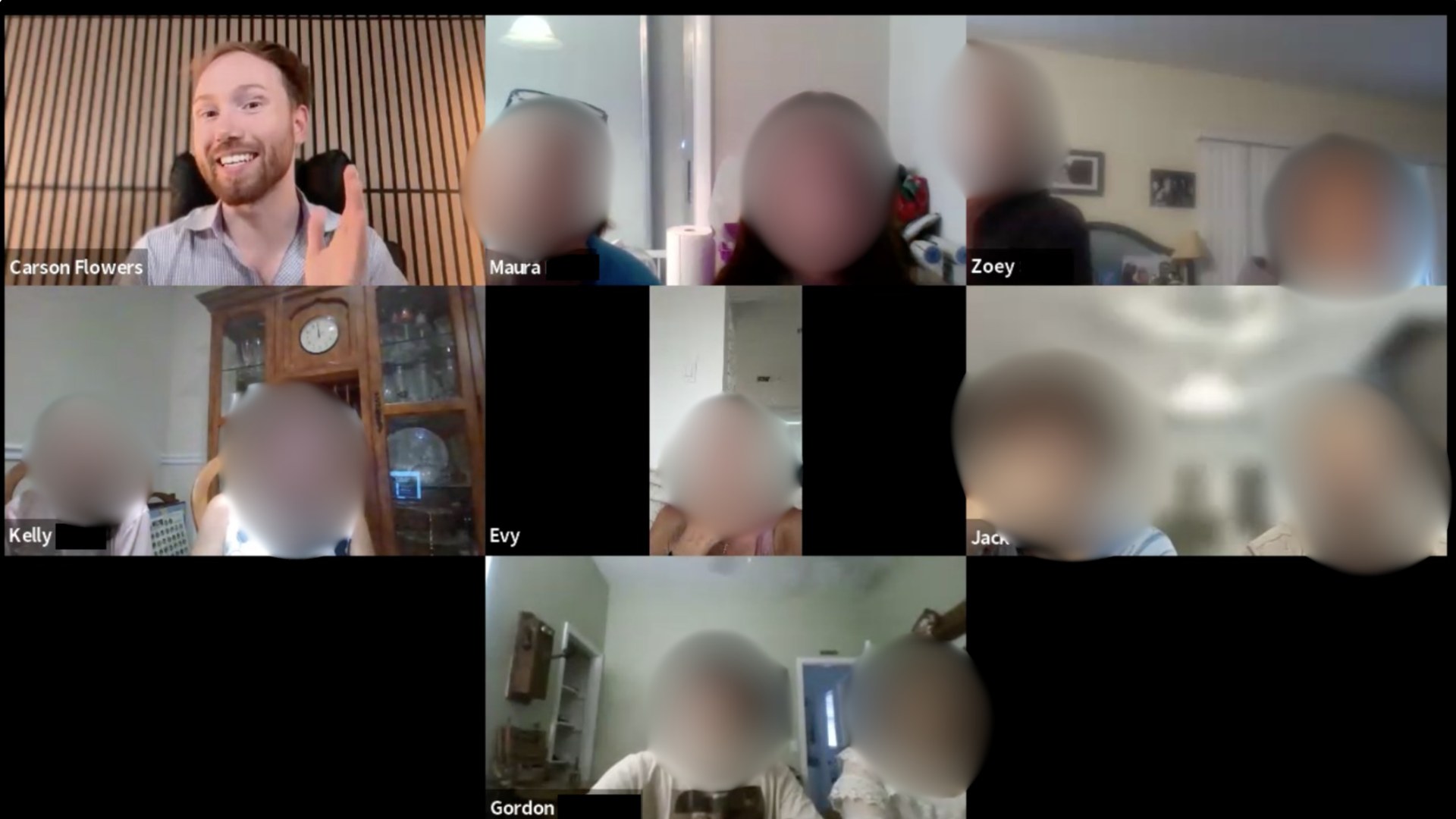
Carson runs these sessions himself. Bring your teen's most recent score, or no score at all. Whether they are in a collegiate program or at a comprehensive high school changes the plan, and we will tell you which one you are dealing with. You leave with their target number for UF, FSU, UCF and USF, the Bright Futures line they are closest to, and a six to twelve week plan.
Book your free Strategy SessionThis one is uncomfortable and it is worth saying out loud, because it is the clearest single number about St. Petersburg we found.
FSU publishes every high school in the country that sent it 26 or more freshmen. Fifty-five schools clear that bar. Pinellas County has two on the list, and both are in the north county: East Lake in Tarpon Springs with 37 and Palm Harbor University with 27. Not one high school in St. Petersburg appears.
For comparison, H.B. Plant in Tampa sent 65 and Lawton Chiles in Tallahassee sent 65. St. Petersburg, a city of a quarter million people with six public high schools, does not have a single school sending 26.
| University | Students from Pinellas County |
|---|---|
| University of Florida | 1,698 enrolled, Fall 2025 |
| Florida State | 1,482 enrolled |
| UCF | 1,523 applied, 716 accepted, 195 enrolled |
Pinellas students do go to these schools, in real numbers. Over three thousand are at UF and FSU right now. But they are going a few at a time from a lot of different schools rather than in a stream from any one St. Petersburg high school.
Here is the honest read. St. Petersburg's problem is not that its students cannot do this. The county outscores Hillsborough. The problem is that no St. Pete school has a critical mass of students walking into the SAT prepared, so there is no pipeline, no upperclassmen to copy, and no default expectation that this is what you do junior year. A student who prepares here is not fighting their school. They are just doing something most of the building is not.
Source: FSU Office of Institutional Research 2025-26 Fact Book, FTIC students by high school and origin by Florida county, Fall 2025. FSU lists schools sending 26 or more freshmen; 1,230 schools sending 25 or fewer are reported only in aggregate. UF Office of Institutional Research, enrollment geographics. UCF Institutional Knowledge Management feeder schools dashboard, 2025-26.
Pinellas is one county but it does not behave like one, and across the bay the picture changes again. These are the metros closest to St. Petersburg.
Every Florida student is eligible for the same award. In St. Petersburg the obstacle is not eligibility, it is distance. The strongest comprehensive high school in the city averages 1062 and the 75 percent award starts at 1190. By the time a parent calls us, the GPA and the service hours are usually already handled. The score is the piece still in play, and it is the piece worth the most money.
That 140-point gap between the two tiers is worth about $8,000. It is the highest-return studying your teen will do this year.
We coach entirely online, so your teen can attend any school in south Pinellas and still work with us. No crossing a bridge at 6pm and no learning center after practice.
No, and that is deliberate. We coach online, which means your teen works with the strongest strategist for their situation rather than whoever staffs the nearest storefront, and it means nobody is sitting on the Howard Frankland at 6pm. The company is Florida-based and works with Florida families only.
Yes. Florida never adopted test-optional admissions. Every school in the State University System, USF included, requires an SAT, ACT or CLT score. A Florida student without a test score does not have a complete application.
Sophomores should take a baseline diagnostic now and sit their first official test late sophomore or early junior year. Juniors should test in the fall and retake in March. Seniors should count backward from the August 31 Bright Futures cutoff, because there are fewer dates left than it looks.
It depends on how much 1-on-1 time your teen needs and how long we have before test day. We set the exact number on the Strategy Session, with no pressure to decide on it, against a Bright Futures award worth up to $30,000.
45 minutes on Zoom. You leave with your teen's exact target score for USF, UF, FSU and UCF, their Bright Futures number, and a 6 to 12 week plan. Yours to keep whether we ever work together or not.
Book your free Strategy Session