
A high GPA with a low SAT score usually points to a content gap. SAT Math tests Algebra 1, Algebra 2 and geometry that advanced students finished years ago, and Carson Flowers estimates about a fourth of the test is grammar that AP English classes rarely teach.
SAT Math Tests the Algebra Your AP Calc Student Forgot. Carson Flowers · 1:28 · October 17, 2026 · Jump to: 0:00 The question, 0:05 Carson's answer, 0:57 What to do next
| Item | What the numbers say |
|---|---|
| Total score range | 400 to 1600 |
| Sections | Reading and Writing, 200 to 800; Math, 200 to 800 |
| Math content tested | Algebra 1, Algebra 2 and geometry |
| AP Calculus, AP Statistics, precalculus content | Carson's view: not what the SAT tests, so these classes do not raise the Math score |
| Grammar's share of the test | About one fourth of the SAT, by Carson's estimate |
| Calculator | Built-in Desmos graphing calculator on the whole Math section |
| Average total score, per Carson | About 1050 |
| Remaining 2026-27 US dates | Dec 5, 2026; Mar 6, May 1 and Jun 5, 2027 |
On this page
Why doesn't advanced math raise the SAT Math score?
Why don't A's in AP English show up in Reading and Writing?
The SAT asks familiar content in unfamiliar ways
The misconception: a top student will score high without prep
Why doesn't advanced math raise the SAT Math score?
Because the SAT does not test the math your child is taking now. The Math section covers Algebra 1, Algebra 2 and geometry. If your junior is in AP Calculus, AP Statistics or precalculus, very little of what fills their homework each night shows up on test day.
That creates an odd problem for strong students. They learned linear equations, systems, quadratics and triangle rules two, three, even four years ago, often with top grades, and then moved on. Every year of advanced math puts more distance between them and the material the SAT asks about. Carson sees scores for many students start slipping soon after they finish Algebra 2, simply because they stop practicing that content.
So for a lot of high-achieving kids, raising the Math score means relearning old math. That is a different job from learning new math, and usually a faster one. A student who once earned an A in Algebra 2 tends to recognize the material quickly once it is in front of them again. The built-in Desmos calculator also helps, but only for students who have practiced using it on SAT-style problems; our guide to the Bluebook Desmos calculator shows how.
If your child's Math score is the one that surprised you, a 15-minute call with our team can pinpoint which old topics are costing points and what a realistic plan looks like for the next test date.
Free 15-minute call
Want a plan for your teen's score?
We look at your teen's current score and the colleges on their list, and tell you what it would take to close the gap.
Why don't A's in AP English show up in Reading and Writing?
AP Lang and AP Lit teach strong reading and writing, and they mostly skip grammar, which Carson estimates is about a fourth of the SAT. Subjects and predicates, commas, colons, periods and transitions are tested over and over. Most high school English classes, including advanced ones, stopped teaching those rules years earlier.
The reading questions ask for a different skill too. In an AP English class, students are rewarded for reading beyond the text: what the author really meant, what the symbolism suggests, what a passage says about its era. On the SAT, the right answer has to be supported by the words on the screen. A student trained to look for deeper meaning can talk themselves out of the plain answer.
Vocabulary is the third gap Carson points to. Schools rarely assign vocabulary study, and many advanced students read less challenging prose than parents assume. AP US History builds a lot of knowledge, but it does not build the grammar or close-reading habits the test rewards.
The SAT asks familiar content in unfamiliar ways
Even when your child knows the material, the SAT tests it in a format school never uses. A school test usually asks a problem the way the teacher taught it. The SAT can ask the same concept from many angles, so a student who memorized one method can freeze on a twist.
Timing works differently as well. In school, finishing early with time to check everything signals a job well done. Carson's point is that the SAT is not built for that, and students who bring their school habits, like double-checking every question in order or refusing to move past a hard one, can lose points they would otherwise earn. Learning when to skip, guess and come back is a skill, and it has to be practiced on real SAT questions.
Some of the gap can also be nerves. A student used to being the top of the class can take a lower score hard; if that sounds familiar, read how to help a teen with SAT test anxiety.
The misconception: a top student will score high without prep
A high GPA does not mean school has prepared your child for the SAT, and Carson is blunt that AP classes do not prepare students for this test. Course grades reward steady work on taught material. The SAT rewards older content, grammar rules and test-specific strategy that most schools do not cover.
A version of this question we hear a lot: a junior carrying AP Physics 2, AP Lang, APUSH, honors chemistry and honors precalculus, plus a varsity sport, comes back with an 1110. Parents read that as a red flag. Carson reads it differently. An 1110 is above the average of about 1050 he cites, so the student is doing fine. It is simply short of the 1300 or 1400 many ambitious families are aiming for, and that first-score disappointment is extremely common among students with straight A's.
The useful takeaway: a lower first score says more about what the test covers than about how capable your child is. For next steps after that first score, see what to do when the SAT score comes back lower than you hoped.
What should a busy, high-GPA student do now?
Start prep now and give it a real place in the week, because Carson's experience is that the SAT gets pushed aside by students who never want to let their GPA dip. Waiting for free time rarely works. Carson compares a teen's schedule to a big house: whatever space there is tends to get filled, so the time has to be claimed on purpose.
What he sees most often is a student who protects every grade, lets SAT practice slide to the back burner week after week, and then gets a small score increase. Making room usually means a trade. Some families scale back a sport for a season; our page on fitting SAT prep into a varsity season covers how athletes do it. Others accept that one AP grade may come in a little lower than it could have been while prep is in full swing.
Here is a sensible order of work for a strong student:
- Pick the next test date and register. The December 5, 2026 SAT has a November 20 registration deadline, and spring dates follow on March 6, May 1 and June 5, 2027.
- Review Algebra 1, Algebra 2 and geometry first, since that is where advanced math students tend to have forgotten the most.
- Learn the grammar rules directly, then practice them on SAT-style questions.
- Take full timed practice tests in Bluebook so pacing becomes familiar.
Carson's advice on retakes is simple: take the next test anyway. It is a few hours, and many colleges superscore, combining the best section scores across sittings. Check each college's policy. For a realistic weekly plan, see how long your teen should study for the SAT.
If you would like a second set of eyes on your child's score report and schedule, book a free 15-minute call. We will look at where the points are and talk through what fits around school and sports.
More answers from Carson
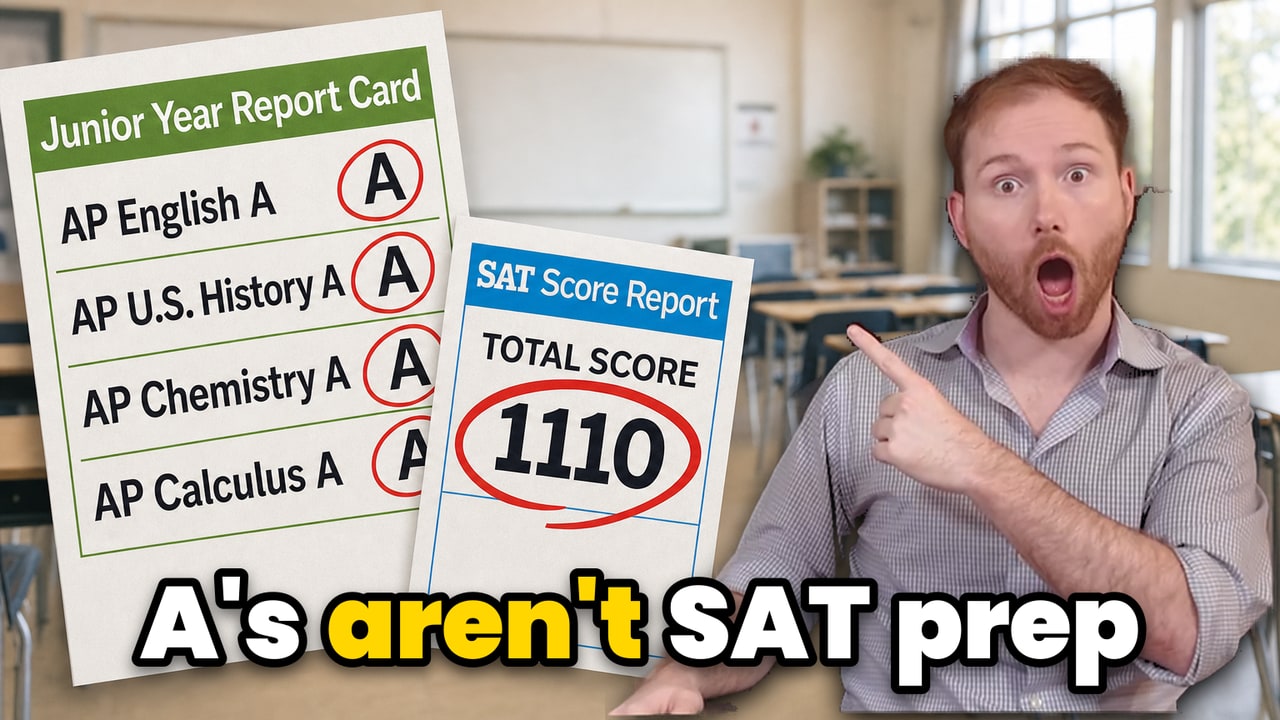 AP Classes and Straight A's Still Led to a 1110 SAT
2:32
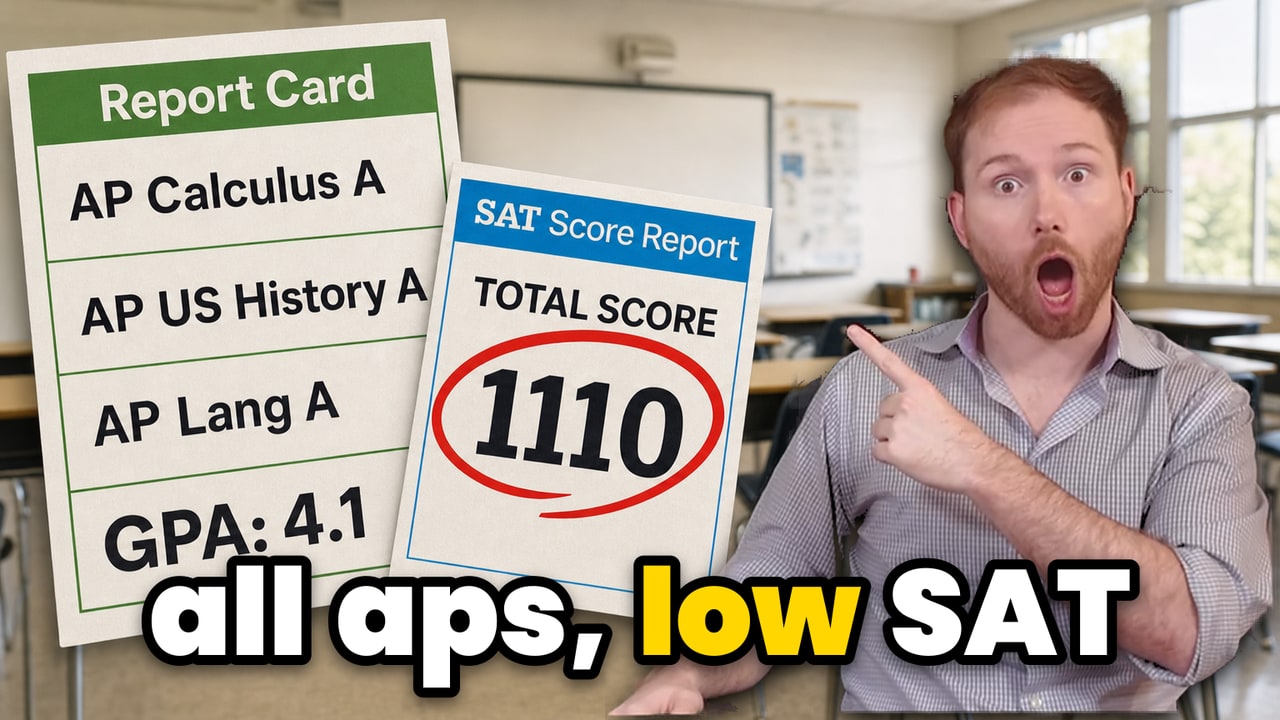 A 4.1 GPA and an 1110 SAT Means a Skill Gap, Not a Smart Gap
2:52
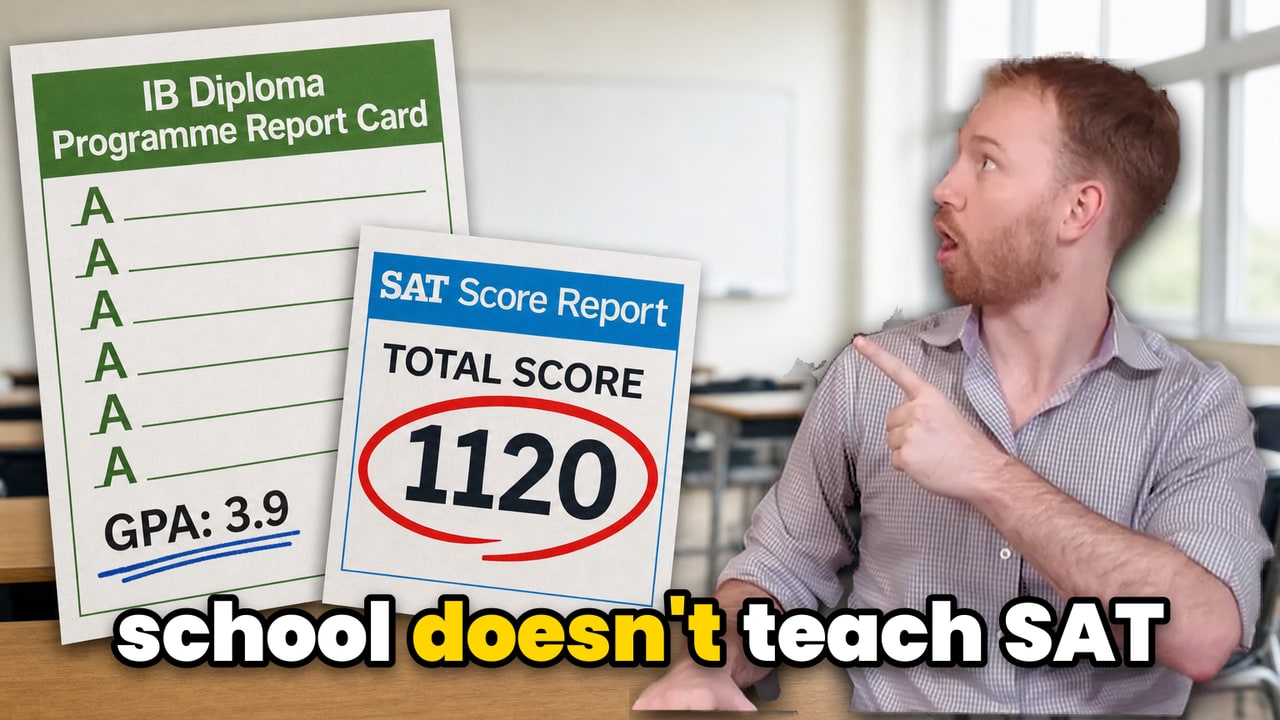 A 3.9 IB Student's 1120 SAT Is a Content Gap, Not a Ceiling
2:48
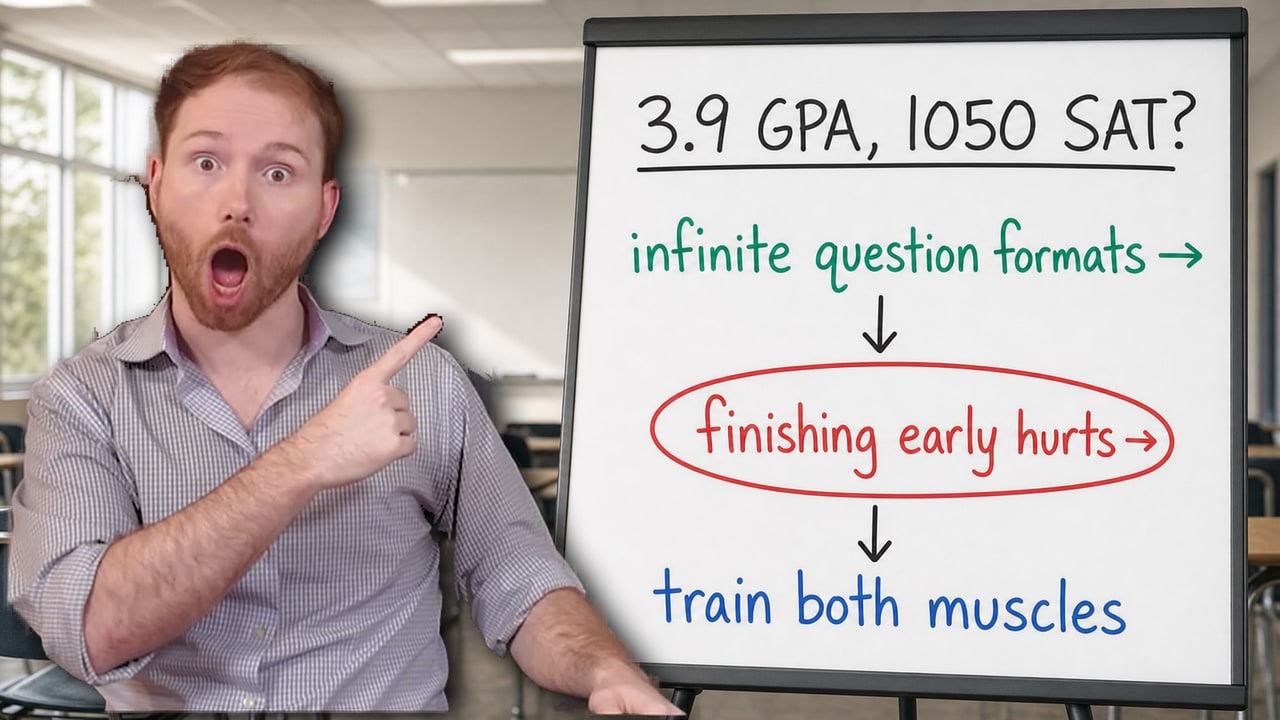 Why Do Straight A Students Struggle on the SAT?
Quick answers
Is it normal for a straight-A student to score low on the SAT?
Yes, it is very common. Carson Flowers sees ambitious students with A's in AP classes get first SAT scores below what they expected all the time, mostly because the test covers material school no longer teaches.
Does AP Calculus help on the SAT?
Not directly. SAT Math tests Algebra 1, Algebra 2 and geometry, so calculus content does not raise the score, and time away from algebra can make students rusty.
Is 740 a bad SAT score?
It depends on whether it is a total or a section score. As a total on the 400 to 1600 scale, 740 is low; as a single section score out of 800, it is very strong.
Is 770 a low SAT score?
As a section score, 770 out of 800 is near the top of the scale. As a total out of 1600, it is well below the average of about 1050 that Carson cites.
Should my child retake the SAT after a low first score?
Usually, yes. Many colleges superscore, combining the best section scores across sittings, so a retake mainly costs a few hours; check each college's policy before planning around it.
Sources
Free 15-minute call
Find out how far your teen is from the score they need.
We look at your teen's current score and the colleges on their list, and tell you what it would take to close the gap.
What's new on this page
October 22, 2026: Published.