







March 6 SAT. The 12-week class starts by December 7. See start dates

Get your teen into University of Minnesota Twin Cities, Carleton College and other top Minnesota colleges.

We help Minnesota students break 1400+ on the SAT so they are competitive at University of Minnesota Twin Cities, Carleton College and the schools on their list.

$5M+in scholarships our students have earned
70Google reviews
14,100+followers for our free SAT and college admissions advice
  • QUINNSAT 1580
  • JONATHAN+200 points
  • KIRASAT 1400
  • MARIASAT 1430
  • DEAGLAN+170 points
  • ZOEY+220 points
  • DAVID+160 points
  • LANDON+150 points
Tampa Bay 28 ABC

As seen on Tampa Bay's Morning Blend

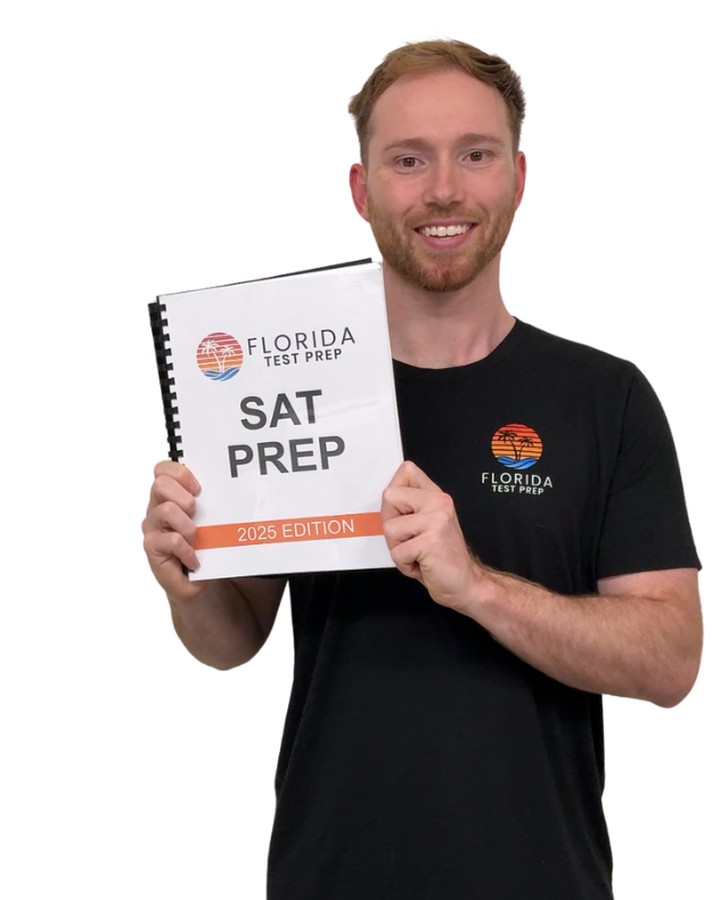
Carson Flowers founder of Florida Test Prep on ABC News

Hear from our families

1400 SAT as a sophomore, in 10 weeks

Kira B. · Plant High School

200+ SAT points in 8 weeks

Jonathan's family · Tampa

1410 SAT in 6 weeks

Tamu Tuboku-Metzger · Parent

1400 in 10 weeks

Alex F. · Plant High School

+220 SAT points in 8 weeks

Rebecca Armstrong · Parent

+140 points in 8 weeks

EJ · Riverview High School

See more student results →

Minnesota admissions are competitive.

Carleton read 6,796 applications and admitted 21.8%. U of M Twin Cities read 41,496 applications and admitted 79.7%.

SchoolMiddle 50% SATAcceptance rate
Carleton College1460-153021.8%
Macalester College1350-1480Not reported
St. Olaf College1320-1440Not reported
U of M Twin Cities1350-149079.7%
Gustavus AdolphusNot published61.8%

Middle 50% SAT and acceptance rate as each school publishes them; cohorts differ by school. The full table with cohort notes is on our SAT scores for Minnesota colleges page.

Minnesota's own students barely take the SAT

College Board, 2025 Minnesota SAT Suite of Assessments Annual Report

Only 3% of Minnesota's class of 2025 graduates (2,149 of an estimated 67,216 high school graduates) took the SAT at any point in high school, one of the lowest state SAT participation rates in the country.

16% of the class of 2026 took the PSAT/NMSQT instead, and the ACT has long been the default test in Minnesota high schools, which is why so few Minnesota colleges publish a deep SAT data set.

College Board

Every school on this list, from the University of Minnesota Twin Cities down to the Minnesota State campuses, is test optional for 2026-27 applicants; none require the SAT or ACT to apply, though submitting a score can still help with admission review and with the merit scholarship grids several schools run off GPA plus test score.

Everyone getting in is already above a 4.0. So that's not the tiebreaker.

The average high school GPA rose from 3.23 to 3.43 in a decade, and admissions offices know it. When every applicant has an A average, the transcript just gets your teen into the pile. The SAT is the one number that means the same thing at every high school in Minnesota, so it is what decides who comes out of it.

In Minnesota, the colleges pay for scores.

Minnesota has no statewide SAT or ACT cutoff scholarship; the state's primary aid program, the Minnesota State Grant, is strictly need-based with no test score component, so score-tied money in Minnesota comes from individual universities' own automatic merit grids.

AwardWorth over 4 yearsSAT score neededWhat it pays
Winona State Outstanding Academic Honors Award~$14,0001420+$3,500 per year for up to 8 consecutive semesters; requires top 5% class rank or a 3.90 GPA, plus a 32 ACT or 1420 SAT. 1420 (ACT 32).
Winona State President's Honor Scholarship (top tier)~$10,0001260+$2,500 per year, renewable with a 3.50 cumulative GPA; requires top 5% class rank and a 3.90 GPA, plus a 28 ACT or 1260 SAT. 1260 (ACT 28).

Winona State's awards renew for 8 consecutive semesters only if the student stays full-time (12+ credits/semester), keeps a 3.50 cumulative GPA, and (for the two highest tiers) lives on campus the first two years; the test score and class-rank thresholds are an either/or, not a strict single cutoff.

Where the money is competitive, the score is one of the few things your teen can still move this year.

Carson Flowers, founder of Florida Test Prep

Why “Florida” Test Prep?

I'm Carson, and I founded Florida Test Prep. I grew up with no college fund, and my first SAT was a 1050. So I built a system for myself. By senior year I scored a 1430, and that one number earned me a spot in an honors college, a Presidential Scholarship, and $81,000 in scholarships.

A couple of years after I graduated I started tutoring on the side in Florida, and our first hundred families came from there. That is where the name comes from. Every class and 1-on-1 has always been live on Zoom, and the SAT is the same test in Minnesota as anywhere else, so Minnesota families get the same coaching, the same tutors and the same guarantee.

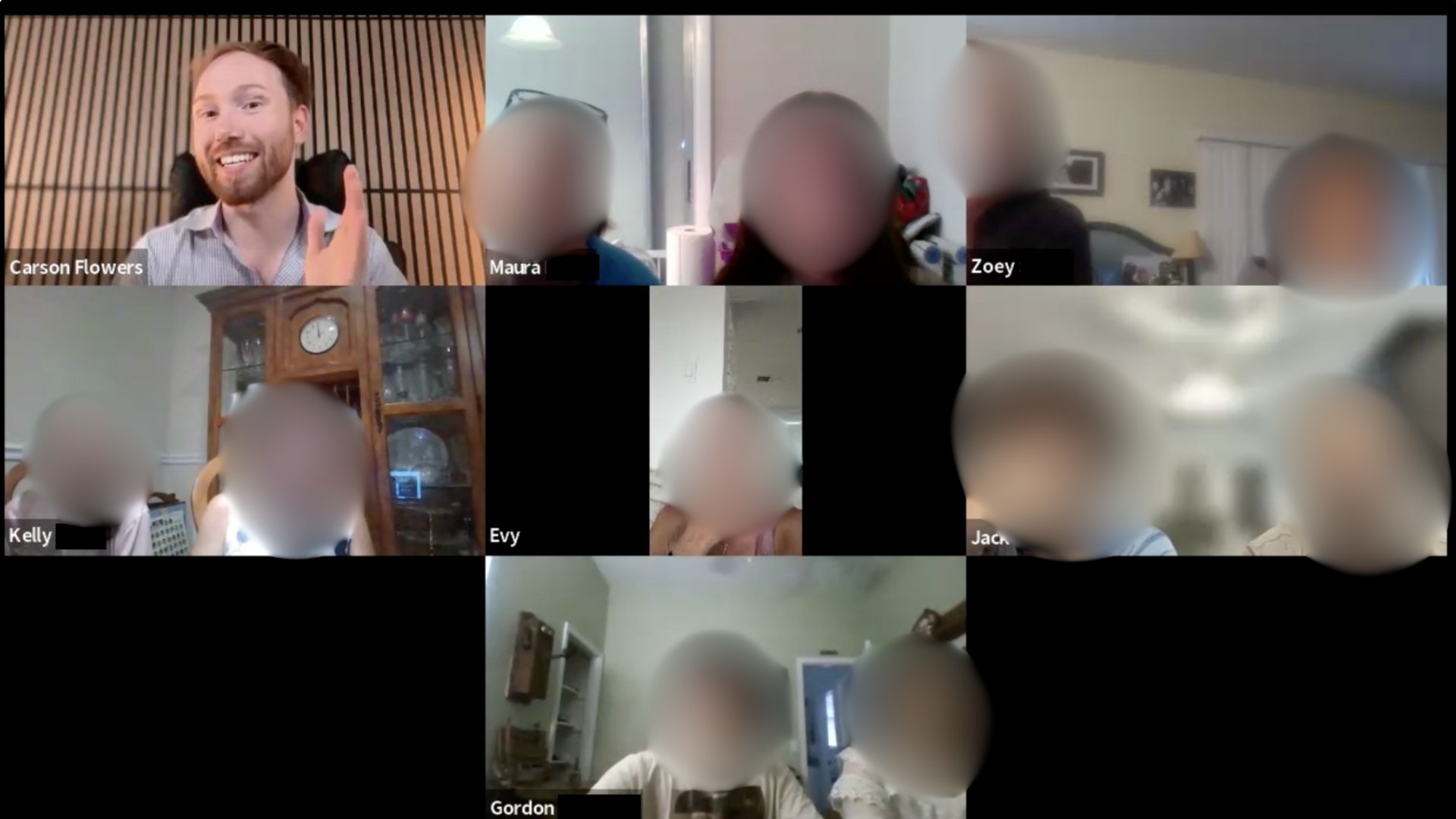
Carson on his weekly webinar for parents.

Carson on his weekly webinar for parents.

Meet the team your family will actually talk to.

Your teen is coached by career test-prep specialists, not college students working a side job. You get their tutor's direct line, and a written update on your teen's numbers every week.

SAT Strategists

Taylor Beyer

Taylor Beyer

Writes the prep materials other tutors teach from. Nearly a decade in SAT prep.

Alex Cross

Alex Cross

Cornell. 12+ years, hundreds of students, multiple perfect scores coached.

Caleb Henry

Caleb Henry

Scored a perfect 1600 himself. UC Berkeley, triple major in engineering and CS.

Karen Wolff

Karen Wolff

Two decades of SAT and ACT prep. Former Assistant Director at Huntington Learning Center.

Karina Yang

Karina Yang

UC Berkeley. Five-plus years coaching students through the digital SAT.

College Admissions Partner

Lesley Morter

Lesley Morter

30 years a school counselor in Tampa, the last eight with IB families at Hillsborough and Robinson. 2023 Yale Educator Award.

Read their full bios →

Our method: Map, Master, Mock

Three steps, in order, built around one teen. Most prep runs every student through the same workbook front to back. We find the exact sub-topics costing your teen points, drill only those, then rehearse under real timing until test day feels routine. That is why our students gain 172 points on average.

01

Map

Find exactly where the points are going.

Your teen takes a full-length diagnostic under real timing. We grade it question by question and find the exact sub-topics costing them points.

02

Master

Drill only what they are missing.

A dedicated tutor every week plus live small-group classes, aimed only at what the diagnostic found. No time wasted re-teaching what they already know.

03

Mock

Rehearse until test day is routine.

More than 20 full-length practice SATs under test conditions, each one reviewed. Test day becomes the fifth time, not the first.

We track every second of your teen's prep. Literally.

Every practice problem your teen touches is measured: the seconds spent on it, the exact sub-topic, and whether the same mistake keeps repeating. Prep aims only at the weak spots, and you see the numbers every week.

See everything we measure

  • Seconds per question
  • Sub-topic weak spots
  • A weekly data text to you

Want the diagnostic before you talk to anyone?

Ask us and we will send your teen a full-length practice SAT plus the question-by-question breakdown of where their points are going. No call required, no cost.

Request a free diagnostic →

Is this right for your teen?

We are not for everyone. Here is who we do our best work with, and who we are honestly not built for.

Best fit if

  • You are a Minnesota family aiming at University of Minnesota Twin Cities, Carleton College, or another top school
  • Your teen is scoring under 1300 and has real room to move
  • They can put in four to six hours a week between now and test day
  • You want a plan and accountability, not another workbook on the counter

Probably not a fit if

  • You are shopping for the cheapest way to clear a scholarship cutoff
  • Your teen will not do the work between sessions
  • You want a weekend cram course two weeks before the test
  • Your teen is already above a 1400 and just needs polish

How it works

Every plan is built around one student. Yours.

01

Start any week

There is no semester to wait for and no cohort to catch. Your teen can begin the week you enroll, which matters because every test date that passes is one less shot.

02

Choose the path that fits

Live group classes, private 1-on-1 coaching, or a combination of both. It depends on how far your teen is from their target and how much time is left.

03

We build the plan on the call

The free parents workshop is where we map it: the exact target score, the gap, and the schedule that gets there. No two plans are identical, because no two students are.

See classes

The Admissions Advantage

Included free with every program. There is more to getting in than a test score, and almost all of it has a deadline. So we run workshops through the year on the parts parents tell us they got wrong the first time. Essays. FAFSA. Scholarship applications. Your family can come to every one.

  • College application strategy workshops
  • Essay coaching, from first draft to submitted
  • A merit aid and scholarship workshop, so no award on your teen's list gets missed
  • FAFSA planning, so the aid your teen qualifies for actually arrives
  • College List Workshop for the schools on your teen's list
  • A deadline calendar for every school on your teen's list
  • A 45 to 60 minute college acceptance strategy session

Bought separately from a college consultant, this runs about $4,500. Here it is part of the program.

You are backed by two guarantees.

1

The Score Guarantee

We do not print a number here, because the right number depends on your teen. On your free parents workshop we set the target score together, based on where they are today, the schools on their list, and the scholarship cutoffs they are chasing. Then we put it in writing: your teen finishes the program and hits that score, or we keep tutoring them free until they do.

2

The first-week refund

Start the program, and if you or your teen are not happy in the first week, you get every dollar back. One hundred percent, no forms, no argument.

5.0 on Google, from real families.

Don't trust my website. Search Florida Test Prep on Google and read them before you ever talk to us.

★★★★★

“We signed up for this course this summer and it was a success. 240 point increase in overall score! I would recommend!”
Tanya, parent

★★★★★

“Jonathan jumped 200 points, 1020 to 1220, and the weekly texts meant we always knew where he stood.”
Parent of a 10th grader

★★★★★

“I used Fl Test Prep to prepare for the August SAT and increased my June score from a 1360 to a 1430. I got to have Karina as a tutor!”
Asada, student

See more student results →

1M+

views on our free SAT and admissions videos. Try the teaching before you spend a dollar.

We give away more instruction on YouTube, TikTok and Instagram than most companies sell. Have your teen watch one free lesson tonight. You'll see the difference before you ever pay us a dollar.

Questions Minnesota parents ask me every week

Why not just use an app, or a $40-an-hour tutor?

An app has nobody watching, nobody adjusting the plan, and no accountability. Most teens quit by week three and nobody notices. An hourly tutor sees your teen once a week and reviews strong topics as much as weak ones, with no timing data, no mock program, and no guarantee. We pair a dedicated tutor with live small-group classes, aimed by per-question data, with a weekly text to you and a guarantee in writing.

What does the program cost?

It depends on how much 1-on-1 time your teen needs and how long we have before test day. Group-heavy plans sit at the lower end, heavy private coaching at the upper end. We give you the exact number on the parents workshop, with no pressure to decide on it, and you can weigh it against what the score is worth at University of Minnesota Twin Cities and Carleton College.

How much can my teen realistically raise their score?

Our students average a 172-point increase, and many gain 200 or more. Every plan starts from a full-length diagnostic, so the target we set is realistic and specific to your teen rather than a number we made up.

How much time does this take each week?

Classes run two hours, with several sessions a week to choose from, so your teen picks the ones that fit around practice, work, and AP classes. Most families find 4 to 6 focused hours a week is enough. We build the schedule around your teen's life, not the other way around.

What if my teen hates studying for the SAT?

Most of them do at first. That is exactly why the structure matters. Live classes with a coach create accountability that a workbook never will, and because we only drill the sub-topics they are actually missing, they stop wasting hours on material they already know. Progress showing up on mock tests is what changes their attitude.

Does Minnesota give every student a free SAT or ACT in school?

No, not through one statewide program for the SAT. Minnesota's own numbers show only 3% of the class of 2025 took the SAT in high school, and any school-day test is arranged district by district, with many districts choosing the ACT instead. Check with your own high school counselor for your district's testing day.

When should my teen start?

Sophomore or early junior year is ideal because it leaves room for multiple test dates. Seniors can still make it work, but every remaining date counts. Most teens only get two or three attempts that genuinely matter, so the earlier you start the more room there is to improve.

Should my teen retake the SAT?

Usually yes, and the data tells us when. We track the score curve across every mock test, so we recommend the real test date once the curve is stable rather than guessing. After an official attempt we can tell you exactly what a retake would take and whether it is worth it.

What SAT score do you need to get into the University of Minnesota Twin Cities?

The university's own site lists a middle 50% SAT range of 1350 to 1490 for its fall 2026 admitted freshmen, with ACT 27 to 33. A score at or above 1490 places in the top quarter of admits; a score below 1350 does not disqualify you, since nearly half of fall 2025 admits submitted no test score at all.

Is this online or in person?

Fully online and live on Zoom, anywhere in Minnesota. Group classes and 1-on-1 sessions are scheduled around your family. No driving across town on a school night.

Pick the class by how far the score has to move.

Live on Zoom, two nights a week. You see the price here and enroll without a sales call.

Most families pick this

12-week SAT class

For a first real attempt, or a score with 150 points or more to go.

Kira went from a 1270 to a 1400 in 10 weeks, as a sophomore.

Guarantee Up 170 points on the official SAT, or every dollar back. See full terms

Start by the week of December 7

4 payments of $449

every 2 weeks, or $1,796 in full

See the 12-week class

8-week SAT class

For a teen with a real gap to close and a test about two months away.

Zoey jumped 220 points in 8 weeks.

Guarantee Up 170 points on the official SAT, or every dollar back. See full terms

Start by the week of January 4

4 payments of $374

every 2 weeks, or $1,496 in full

See the 8-week class

6-week SAT class

For a teen close to the line, or one who has prepped before and stalled.

Amanda went from a 1280 to a 1390 in 3 weeks, as a senior.

Guarantee Up 170 points on the official SAT, or every dollar back. See full terms

Start by the week of January 18

4 payments of $324

every 2 weeks, or $1,296 in full

See the 6-week class
See classes

Not ready yet? Join the free parents workshop

See SAT scores for Minnesota colleges →
Try the first week for $012-week SAT class
See classes